




The magazine of innovation in Africa

They used to deploy at 3 a.m. Not anymore.
Published 4 days ago
Last year, the Dev ENIFT team sometimes started deploying as early as 2 or 3 a.m., just to leave enough time to fix whatever broke and get the project stable before the deadline.
This year at 24H by WebCup, every new version went live in minutes. Pixel Penguin, who finished third in Madagascar, made the same switch to Hodifly, Hodi’s deployment tool. Both teams share what changed.
24 hours to build a city
Created in 2011 by the Webcup Association in Réunion Island, 24H by WebCup brings together developers from across the Indian Ocean every year: the Comoros, Réunion, Madagascar, Mauritius, Mayotte and Rodrigues. Every territory competes at the same time, on the same brief. Each one then selects a team to represent it at the international final at the end of the year.
On October 3 and 4, 2026, the brief was called TERRA NOVA: the first city of a new world. Teams had to build the city’s central digital platform, using a shared API. Requests came in waves of tickets throughout the 24 hours. Each new wave pushed teams to understand fast, split the work and ship an updated version.
In this format, deployment is no small detail: the app has to be live for the jury, and it has to keep evolving.
Two teams, two projects
Pixel Penguin is made up of two female and two male developers, with complementary skills in backend, UI/UX and DevOps: Antsa Razafindratovonirina, Mihajatiana Andriakotonerason, Idealy Mamin’ny Aina Razafindratovonirina and Randie Ranaivoson. Some were already colleagues, others knew each other from university, but it was the first time all four worked together. The team’s name is a nod to Linux and its famous penguin.

They built SuperNova, a portal bringing the city’s services together around three spaces: citizens, city agents and the High Council. Users can report an issue or book an appointment through an interactive map, receive real-time alerts and take part in public consultations. Multilingual support and accessibility were built in from the start. The team placed 3rd in Madagascar.
Dev ENIFT is a team of three: Steph Gosinary, frontend developer and UI/UX designer, Daoud Djaffar, full-stack developer, and Faliarison Raphaël Randriantsoa, backend developer specializing in security.
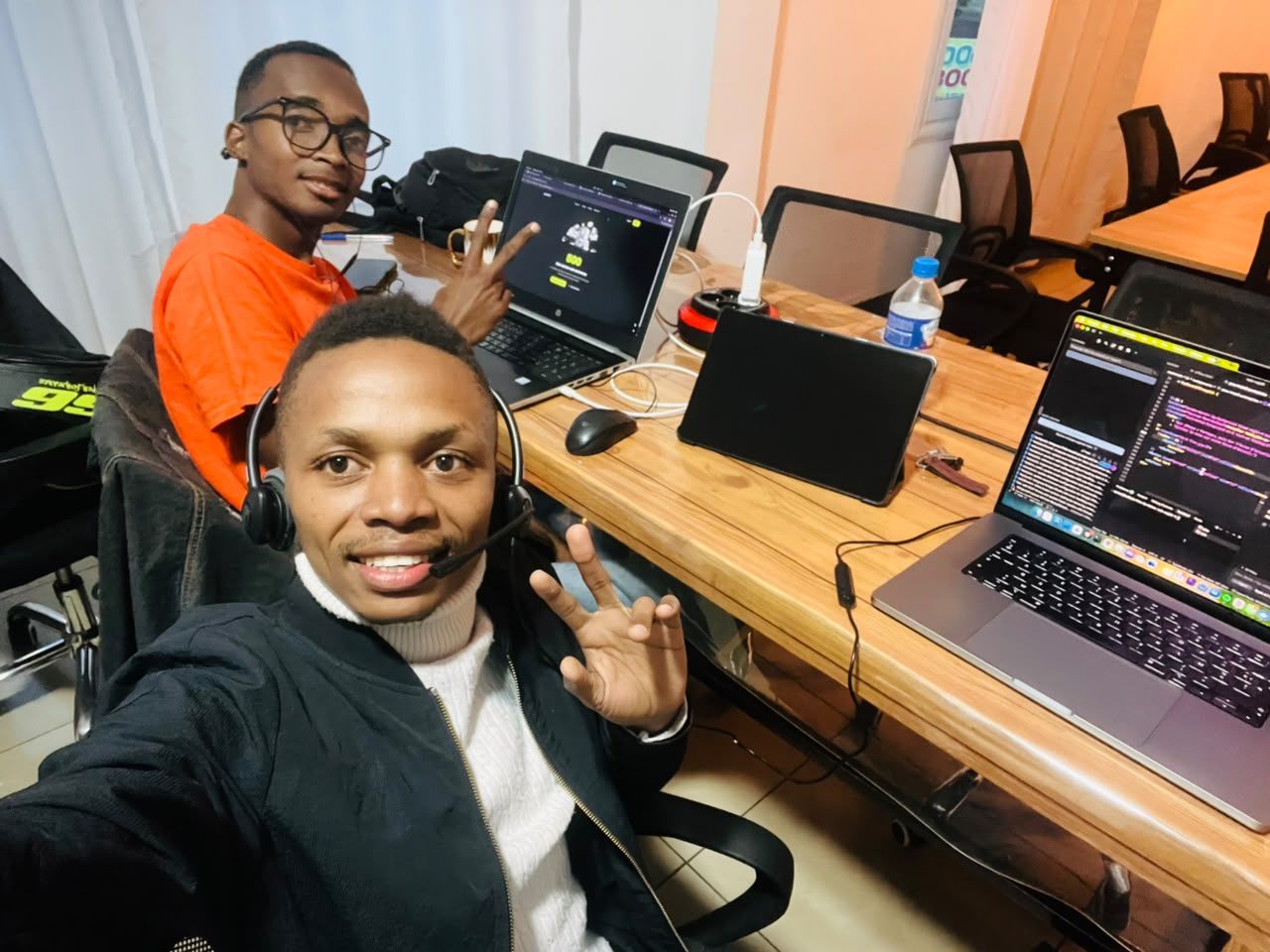
On top of their Terra Nova platform, they built Terra Task, a lightweight Jira-style tool to view tickets, assign them and track progress. They deployed it too, so everyone could follow the updates.
Before: deploy late and cross your fingers
Both teams had taken part in WebCup before. And both remember deployment the same way: a manual, slow and risky step.
At Pixel Penguin, everything was done by hand through cPanel: pull the code, delete the old version, upload a ZIP, unzip it, redo the configuration, and sometimes update the database with phpMyAdmin. “A deployment took about 10 to 15 minutes, and a single error could cost us another 10 to 30 minutes. So we tended to deploy late, which was risky during a 24-hour competition.”
Dev ENIFT felt the same pressure: “Deployment worried us. We sometimes started as early as 2 or 3 a.m. to have time to fix any issues and stabilize the project.”
This year: one push, a few minutes, and it’s live
This year, Hodi made Hodifly available to the teams. The idea: connect your Git repository, push your code, and the app is deployed. No more files to upload or configuration to redo with every version.
Dev ENIFT expected deployment to take a lot of setup and manual work: “We decided to try the tool, and within about ten minutes we understood how to use it and had deployed our first project. We were pleasantly surprised by how simple it was.” During the competition: “Once the code was pushed to our Git repository, we’d wait a few minutes and the changes were live on the server. It was really reassuring, and it let us focus more on the challenge.”
For Pixel Penguin, pushing code to the main branch was all it took to deploy. The team could ship much earlier and more often, without handling files or configuration manually. Deployment status notifications also helped them spot issues quickly.
The team sums up the difference in one sentence:
“We saved time, but above all we gained peace of mind: we’d push, check, and keep on coding.”
By the numbers
| Before (manual deployment) | With Hodifly | |
|---|---|---|
| Deployment time | 10 to 15 minutes | A few minutes after a push |
| When something breaks | 10 to 30 minutes lost | Issues spotted quickly through notifications |
| When teams deploy | Late, sometimes from 2–3 a.m. | Early and often |
The final sprint
The last three hours were the most intense for Pixel Penguin. Two urgent alert requests landed back to back: a power outage, then a solar storm. In about 1 hour 15 minutes, the team built real-time alerts with printable instructions.
“It was intense, but it was also the moment we felt we could finish the project the way we wanted.”
For Dev ENIFT, the defining moment was quieter: the wait between two waves of tickets. It took patience, staying focused on the work already done and checking it before tackling the new requests.
When going live is no longer a source of stress, teams can focus more on what matters: building.
Congratulations to Pixel Penguin, Dev ENIFT and every team in this edition, and thanks to the Webcup Association and Avana Hub for organizing the event in Madagascar.
Discover HodiflyRead more in Building Africa
 Read ›
Only 5% of Africa’s data centres are AI-ready: what it means for South Africa and Nigeria
 Read ›
CLOUD Act, FISA 702: what African data hosted on a US cloud provider is really exposed to
 Read ›
Impact IA 2026: From Vision to Use Cases, Really?
 Read ›

