



The magazine of innovation in Africa
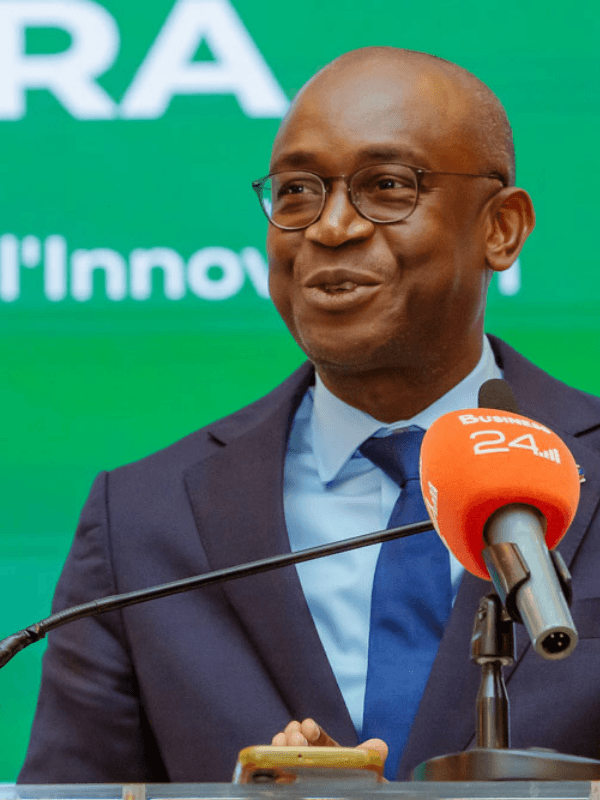
Impact IA 2026: From Vision to Use Cases, Really?
Published yesterday
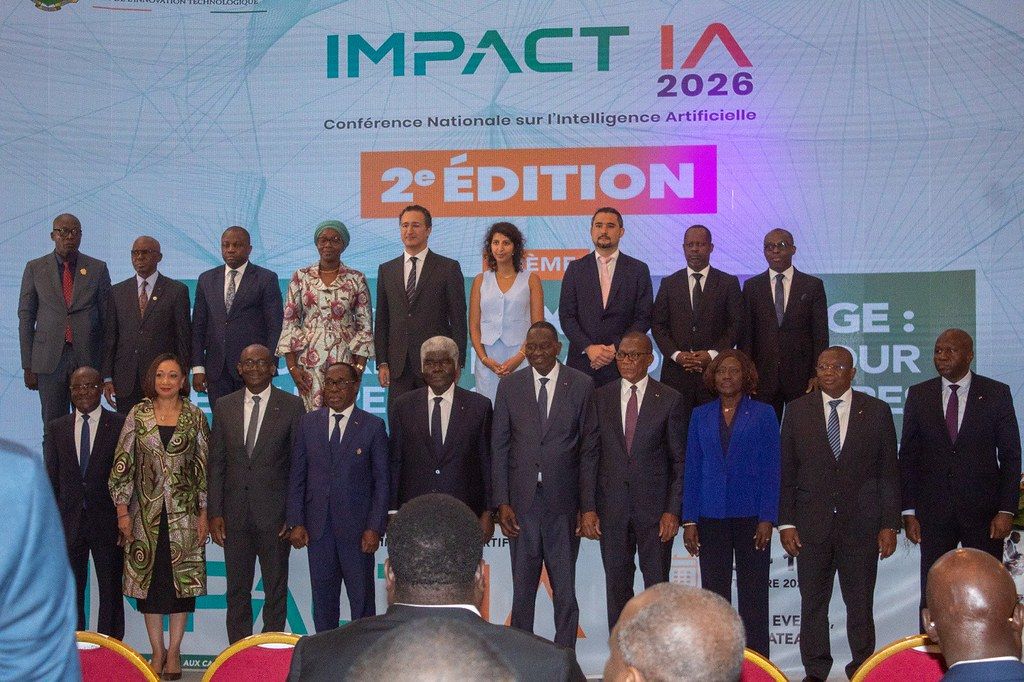
From September 9 to 11, 2026, Abidjan hosted the second edition of IMPACT IA, Côte d'Ivoire's national AI conference. This year's theme left no room for ambiguity: "From Vision to Use Cases: Structuring National AI to Solve Our Priority Challenges."
A year earlier, the first edition had already called for moving "from words to action."
This time, the vocabulary has shifted. Now it's about use cases, execution, measurable results.
So, a year on, what has actually changed?
Three Days, From Talk to Substance
For three days, Latrille Events in Cocody brought together public officials, companies, researchers, startups, and ecosystem players around artificial intelligence.
The second edition ran September 9 through 11: a first day of sector-focused working sessions, followed by two days open to the public, with talks, masterclasses, demos, and conversations across the ecosystem.
About twenty tech companies also showcased solutions spanning AI, cybersecurity, education, and digital infrastructure. Among them, Farafinah Kanu presented Boussole IA, a tool designed to help businesses assess their AI maturity.
On the ground on the 10th and 11th, we sat in on several masterclasses that offer a closer look at what's being built behind the headline numbers. Bakary Diarrassouba, of Souba, showed how to build an AI agent to digitize a business task: a use case designed and executed locally, not a textbook example. TIA Prince covered cyber compliance and data risk management, an issue that surfaces, in one form or another, in nearly every national AI strategy. And Isaac Bayoh and Mariama Diallo, of FuturAfric and AethexAI respectively, presented work on AI in Ivorian local languages: the same problem, the same urgency, that drives a company like Lelapa AI to build from Southern Africa rather than wait for a translation to arrive from elsewhere.
But the most interesting part may have happened before the official ceremony even began.
During the September 9 workshops, players from government, agriculture, education, healthcare, and the private sector worked to identify problems AI could concretely help solve.
Eleven priority use cases came out of it.
That's exactly where this year's theme gets interesting: the conversation is no longer just about what AI could change. It's starting to name the problems it needs to help solve.
The Question Is No Longer Whether to Go
At the official opening, Prime Minister Robert Beugré Mambé himself stressed the shift from vision to execution, and the need to move initiatives from experimentation to deployment.
The Ministry of Digital Transition and Technological Innovation, led by Djibril Ouattara, presented its 2026-2028 Acceleration Plan (Plan d'accélération 2026-2028): seven pillars and 40 priority projects, covering AI, cybersecurity, digital skills, and the development of the tech innovation ecosystem.
One point is worth flagging, precisely because it's easy to get backwards: the audit didn't come after the conference to justify it, it came first. The partnership with Mistral was signed on August 17, three weeks before Impact IA opened: the ecosystem assessment fed the workshops, not the other way around. That's not a minor detail. It's the difference between a conference that produces intentions and one that sorts through data already gathered to find what's genuinely a priority.
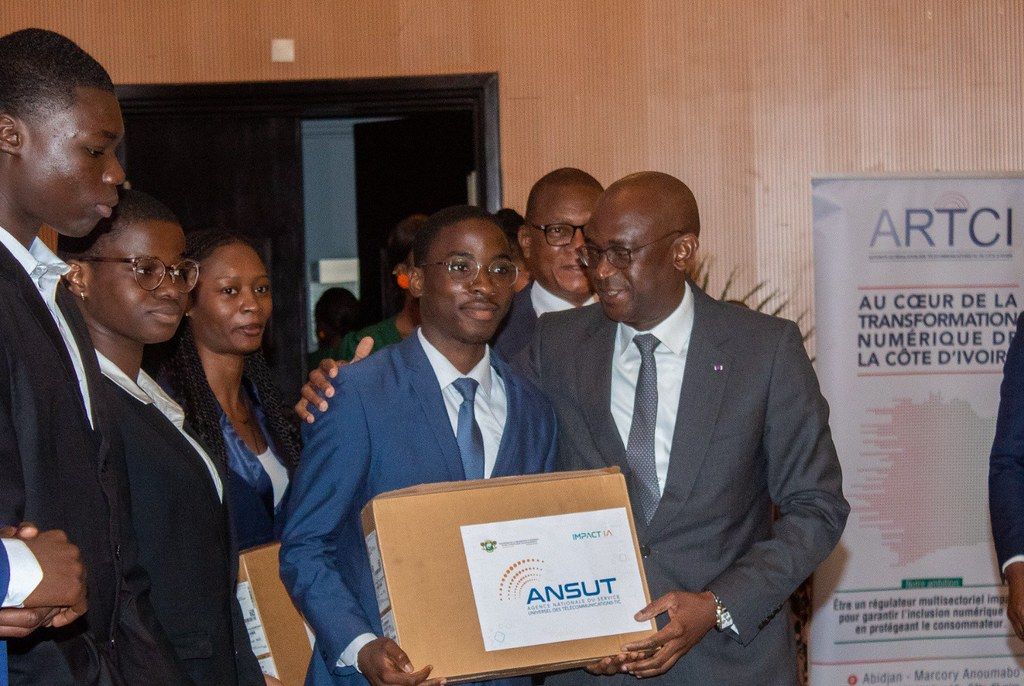
Twelve Ivorian students also received training scholarships in AI, data science, and related fields, through a partnership between the ministry and Aivancity.
In other words, the building blocks are starting to appear: use cases, skills, infrastructure, funding, governance.
But a strategy doesn't become a transformation just because it's now written into a plan.
And Where Does Sovereignty Fit In?
This is probably one of the most interesting threads of this edition.
Côte d'Ivoire wants to develop AI that answers its own priorities, build up its skills, and structure its digital infrastructure.
At the same time, the country is working with international tech players. The partnership with Mistral, signed in August 2026, is meant to help study and evaluate Côte d'Ivoire's AI ecosystem.
That raises a question that goes well beyond Côte d'Ivoire:
How do you build local capacity without cutting yourself off from technologies and expertise developed elsewhere?
The answer probably doesn't lie in choosing between "all local" and "all international."
It lies more in the ability to control what's strategic: data, infrastructure, skills, use cases, and the conditions under which technologies get deployed.
That's also why infrastructure deserves a bigger place in AI discussions.
An AI can be designed locally. Data can be produced locally. Use cases can respond to local realities.
But where do the models actually run? Where is the data stored? Who operates the infrastructure? Who controls the environments these systems run in?
These questions are part of the story, and they're ones every pan-African cloud player has to answer too, Hodi included. Neither the National AI Alliance Pact (Pacte de l'Alliance nationale pour l'intelligence artificielle), nor the Mistral partnership, nor the 2026-2028 Acceleration Plan answers this explicitly at this stage: they set priorities for use, not yet a framework for infrastructure. That's the next question Côte d'Ivoire will need to answer, not in a year, but in the coming months, as the eleven use cases move from paper to prototype.
Côte d'Ivoire isn't alone on this ground: Rwanda, Senegal, and Egypt are each moving forward with their own national strategies. What sets one approach apart from another isn't the stated ambition, which is essentially the same everywhere. It's the method: audit before you prioritize, prioritize before you multiply use cases, sign a pact that carries accountability rather than a statement of intent. That sequence, more than the end result, is what's worth watching beyond Côte d'Ivoire's borders.
Use Cases, Yes. But How Far?
IMPACT IA's closing ceremony saw the signing of the National AI Alliance Pact between the state and the private sector. The text emphasizes structuring data, strengthening digital infrastructure, building skills, supporting research and innovation, and an ethical, responsible framework.
The direction, then, is clearly stated.
The next step will be harder to measure: how many use cases will actually move into testing? How many will reach deployment? What results will they produce? And above all, what capabilities will stay in Côte d'Ivoire for good?
That's where, in part, the difference will be decided between an AI strategy and a genuine national capacity to use, develop, and master artificial intelligence.
The Real Question for the Third Edition
IMPACT IA 2026 will have surfaced use cases, commitments, and new operational building blocks.
The third edition will have one advantage: it'll be able to look back.
Which projects will actually have been deployed?
Which talents will have been trained?
Which infrastructure will have been strengthened?
Which solutions will have found their place in government offices and companies?
And above all: what will Côte d'Ivoire be capable of doing on its own by then?
That's probably the moment we'll be able to truly measure the distance covered between vision and use cases.