
The magazine of innovation in Africa
Darija AI: what Morocco's first open models can do
Published yesterday
Morocco and Mistral AI have released two open-source AI models built for Darija, Moroccan Arabic. Here is what they do, what they leave out, and what they mean for anyone building services for Moroccans in their own language.
Two models, no fanfare
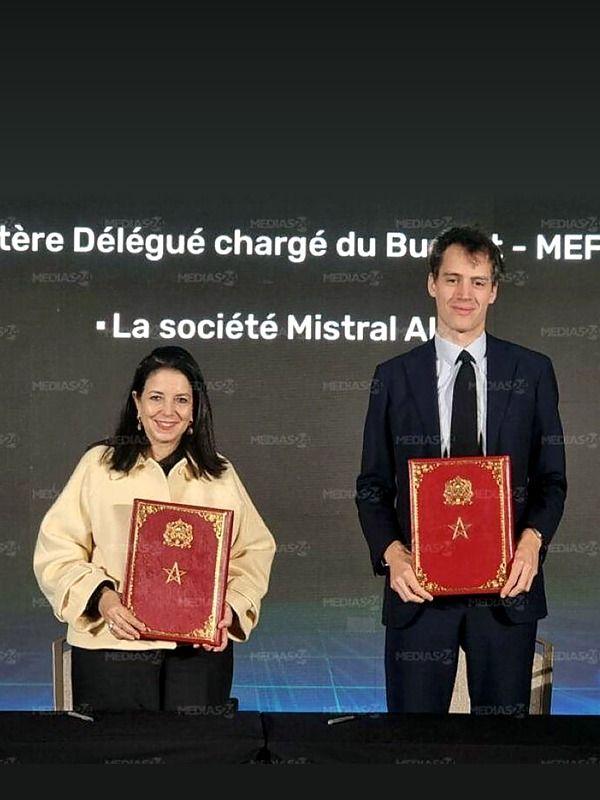
In October 2026, Mistral AI published two Darija models on Hugging Face, the main hub for open AI models. They sit in a collection named after its Moroccan partner, the Ministry of Digital Transition and Administrative Reform (MTNRA). The speech model was co-developed with the ministry, its model card says.
The release follows a memorandum of understanding signed in September 2025 and a joint research lab opened in January 2026, according to Moroccan outlet Le Brief. In late September, both partners had presented the models as the first results of that work.
Both are released under the Apache 2.0 licence. Anyone can download, modify and use them, including commercially.
What the Darija AI models actually do
LIDstral Arabic answers a simple question: what language is this? Given a text in Arabic script, it sorts it into one of 51 categories, from Modern Standard Arabic to Arabic dialects and other languages that use the same alphabet. A chatbot or a search tool needs that answer before it can handle a message in Darija.
On Darija, it scores 88.67 out of 100, well ahead of the existing tools it was compared with, according to its model card.
Voxtral Mini 4B Realtime Arabic turns speech into text as people talk. It handles Modern Standard Arabic and dialects, including when speakers switch languages mid-conversation. Mistral says it gets fewer than 9 characters in 100 wrong on average.
These are the developer's own numbers, and Mistral notes they can shift depending on how they are calculated. Full results are on the model cards (LIDstral Arabic, Voxtral). As of 16 November 2026, we had found no independent evaluation.
Why Darija is a hard case
Darija is what researchers call a low-resource language: there is little written or recorded data to train models on. That gap is what led a team to build Atlas-Chat, a family of Darija chat models released in 2024. According to its authors, the 9-billion-parameter version beats larger models on DarijaMMLU, a Darija version of standard general-knowledge tests.
The team spans the MBZUAI university, the EMINES engineering school at Mohammed VI Polytechnic University and AtlasIA. AtlasIA describes itself as "a community of engineers, researchers, students and professionals" building open Moroccan AI models.
Then there is geography. Darija sounds different from one region to the next, and regional accents make the task harder, as L'ODJ journalist Basma Berrada points out. Mistral's published tests do not yet break results down by region.
What about Amazigh?
Darija is not the only language Moroccans speak every day. According to the 2024 census by the High Commission for Planning (HCP), 24.8% of Moroccans use Amazigh in daily life: 33.3% in rural areas and 19.9% in towns and cities. The Moroccan Association for Research and Cultural Exchange (AMREC) says the figure is an undercount, especially in cities.
In a July 2026 op-ed for Project Syndicate, Minister Delegate Amal El Fallah Seghrouchni mentioned a first Moroccan language model covering Arabic, Darija and Amazigh. The two models released in October cover Arabic and its dialects.
Other work is under way. On 24 August 2026, Rabat and New Delhi agreed to set up a joint commission on languages and digital technologies, with the aim of bringing Darija and Amazigh into government digital services, according to We Are Tech.
Open models, local control
In the same op-ed, the minister makes the case for a Moroccan "third way" in AI, centred on appropriating the technology rather than simply consuming it.
Open models make that idea concrete. A ministry or a company can run them on its own servers, in Morocco, without relying on a remote service. Public-sector use still has to meet requirements on accuracy, personal data protection, security and reliability, Le Brief notes.
L'ODJ adds that any service transcribing conversations will need to know where the recordings are processed, since they may contain sensitive information.
Over to Morocco's builders
Both models are open. Moroccan researchers, startups, companies and public bodies can download them, run them on their own recordings and see how they hold up, region by region.
They are the ones who will show what these models can do in real life. Which Moroccan service will be the first to answer its users in Darija?
Also on Building Africa