




The magazine of innovation in Africa
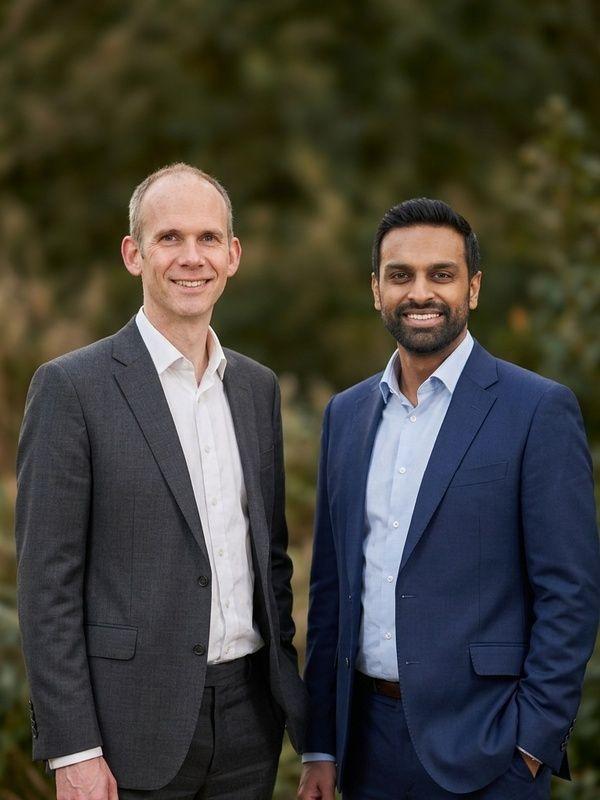
Jacaranda Health: the team that turned a text message into a maternal health service
Published today
In 2010, Nick Pearson set out to make childbirth safer in Kenya. Sixteen years later, his team answers expectant mothers by text message, with an AI that sorts the questions and nurses who take the urgent ones. The story of a team that changed course more than once, for anyone building health or AI products for people without a smartphone.
A death that should not have happened
The story of Jacaranda Health starts with a loss. Nick Pearson's wife, an obstetrician working in western Kenya, saw a friend die in childbirth. Better care, she said, could easily have prevented it, according to the Mulago Foundation, which supports Pearson.
At the time, Pearson was investing in Kenyan businesses for the impact fund Acumen. He saw how badly the health system needed help, and how much room there was to improve it. In 2010, he founded Jacaranda Health to bring a business mindset to maternal care.
A hospital first, then a change of course
Jacaranda began by delivering care itself. First mobile clinics, then low-cost maternity hospitals for mothers on the outskirts of Nairobi.
Then the team looked at the numbers. Around 2017, they saw that roughly 80% of Kenyan mothers give birth in government hospitals, Pearson explained in a 2023 podcast with Dimagi. The impact was in the public system, not in a private hospital chain.
So Jacaranda spun off its hospitals as a separate social enterprise and started working with county governments. Some funders, who knew Jacaranda as a hospital business, walked away. Pearson's lesson: explain a change of course more carefully than you think you need to.
The text message that became a service
Inside the public hospitals, Jacaranda brought nurse training and a text-message service called PROMPTS. At first, it simply sent pregnant women reminders about their clinic visits.
Then the mothers started writing back. Is avocado safe during pregnancy? Is this swelling normal? As early as 2019, co-executive director Sathy Rajasekharan, who previously worked in clinical research and at the Clinton Health Access Initiative, wrote that the team had quickly realised mothers had a lot of questions.
The team decided to answer them. Today PROMPTS receives around 15,000 questions a day, according to NPR. When Jay Patel, Jacaranda's director of technology, joined, it was fewer than 100.
Built for the phone in her hand
The design choice that matters most is the channel. PROMPTS runs entirely over SMS. It is free for the user and works on a basic phone, with no data plan and no internet.
That choice follows the reality of its users. As Patel told NPR, a mother in rural Kenya who starts bleeding at night cannot simply search online for answers. A text message is what she has.
The service speaks English, Swahili and Sheng, the street language of Nairobi that mixes the two. It is used in public clinics in 24 Kenyan counties and reaches an estimated 700,000 women a year, according to NPR.
The machine sorts, the nurses answer
As the questions multiplied, the team added machine learning. In 2023, Pearson and Rajasekharan described a model that reads each message, works out what the mother is asking, and only replies on its own when it is at least 90% confident. Everything else goes to a human.
The principle holds in 2026. About 7% of messages are flagged as potentially urgent, NPR reports. They skip the automatic reply and go straight to a priority queue, where a nurse reads the mother's history and calls her. A team of 18 nurses monitors the service around the clock and audits the answers.
Local language is where general-purpose AI falls short. A mother who writes that her baby "is not playing" is talking about movement in the womb, not a newborn's play, Rajasekharan explained in 2025. A model trained elsewhere would likely miss it.
Why every hour counts
Kenya records about 6,000 maternal deaths a year, NPR reports. Almost a third are believed to be linked to delays in seeking care. That is the gap PROMPTS targets: the hours between a worrying symptom and a visit to the clinic.
The messages also produce data for the public hospitals. Anonymised feedback shows doctors where care is uneven: blood pressure checks are common, for example, while breast exams are rare.
The real cost of keeping humans in the loop
Running the service costs about $2 per user, covering pregnancy and the first year after birth. Jacaranda absorbs that cost, so mothers pay nothing.
The nurses are what make the system trustworthy. They are also what makes it expensive to scale. Jacaranda is now extending PROMPTS to parts of Ghana, Nigeria and Tanzania, with versions for Twi and Hausa speakers.
The researchers interviewed by NPR all come back to the same point: what happens when the AI files an urgent message as routine, and how fast is the mistake caught? No independent evaluation of PROMPTS appears in the sources we reviewed.
Pearson's team has already rebuilt its model once, when it left its own hospitals for the public system. The next test is the one every new language brings: can the nurse queue keep pace in Hausa and Twi the way it does in Sheng?
Read more in Building Africa
 Read ›
They used to deploy at 3 a.m. Not anymore.
 Read ›
Only 5% of Africa’s data centres are AI-ready: what it means for South Africa and Nigeria
 Read ›
CLOUD Act, FISA 702: what African data hosted on a US cloud provider is really exposed to
 Read ›

