



The magazine of innovation in Africa
Lelapa AI: Turning African Constraints Into an AI Advantage
Published 6 days ago
When a banking app cannot understand Zulu, the problem is not just linguistic. When a digital public service only works in English, some of its users may effectively be left out.
For AI models developed elsewhere, local context can be just as difficult to understand as the language itself.
This is the space Lelapa AI has chosen to work in.
Not to build yet another generative AI model, but to develop language systems capable of operating in environments where data is fragmented, computing resources are limited, and multiple languages coexist.
Starting with Constraints
African languages remain significantly underrepresented in the data and AI models available today. Data is often scarce, and model performance can vary considerably from one language to another.
Lelapa AI starts precisely from this problem.
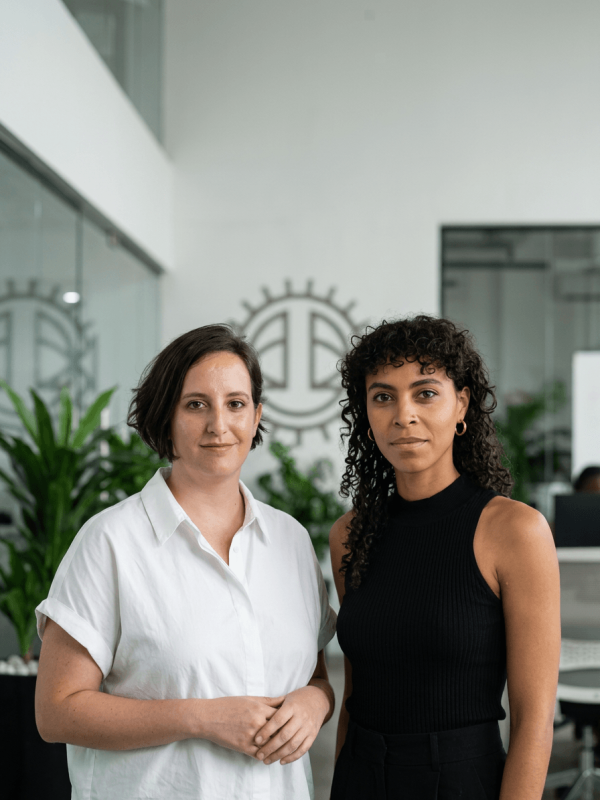
Founded in Johannesburg in December 2022 by Pelonomi Moiloa and Jade Abbott, the company develops language AI systems tailored to African languages while also being designed to use resources efficiently.
For Lelapa, the challenge is not simply to make AI work in more languages. It is also about reducing the resources required to run it.
In a 2024 interview with Rest of World, Pelonomi Moiloa explained that the lack of data for African languages is very real, but that language models can also learn to become more efficient and learn from less data.
This approach addresses a very practical reality across the continent: when computing power, data, and budgets are not unlimited, efficiency is no longer merely an optimisation. It becomes a prerequisite for deployment.
AI That Starts with Context
Lelapa’s ambition therefore goes beyond translation. The goal is to build language systems suited to environments where available data, infrastructure, and languages impose a different set of constraints.
Pelonomi Moiloa frames the issue another way: models developed elsewhere may lack an understanding of local context and embed perspectives that do not necessarily reflect the communities they are intended to serve.
The question then becomes less “How do we translate this model?” and more “How do we build a model that truly understands the people who will use it?”
This question lies at the heart of Lelapa’s work.
The company is developing InkubaLM, a multilingual Small Language Model designed for African languages, as well as Vulavula, a natural language processing service capable of transcribing, translating, and analysing content in local languages such as isiZulu and Sesotho.
Vulavula is designed in particular for contact centres in the telecommunications and financial services sectors, where multilingual conversations can then be transcribed, translated, and analysed.
Language is therefore no longer simply an interface issue. It becomes a matter of service quality, access and, for businesses, the ability to understand their own users.
The Journey Behind the Project
Pelonomi Moiloa’s own background is quite different from a conventional career path in AI.
Trained as a biomedical engineer, she worked in Japan on medical image analysis using neural networks before moving into data science and later joining Nedbank.
There, she led projects involving fraud detection, human resources, and marketing.
In 2022, she co-founded Lelapa AI with Jade Abbott.
Her journey reveals something interesting about the way some African AI projects emerge: not necessarily from a race to build the largest model, but from the intersection of research, data, real-world use cases, and practical constraints.
Building with Less to Go Further
Today, Lelapa champions an approach based on efficiency by design.
Rather than building massive systems and then trying to make them less costly, the company says it incorporates this constraint from the outset: developing models that require fewer resources, are more affordable, and can be deployed in environments where infrastructure is not always abundant.
And this may be where Lelapa’s story becomes relevant far beyond African languages.
A local constraint can become a laboratory for innovation.
If AI has to work with less data, less computing power, and in complex linguistic environments, it forces us to rethink the very way these systems are built.
\The question is therefore no longer simply which model to choose, but rather: was this model designed for my users, my context, and my constraints, or was it simply adapted after the fact?
Building for Africa is not just about adapting existing technology.
Sometimes, it means starting by listening to the problems that technology needs to solve.
Perhaps Africa does not need to catch up with AI.
Perhaps AI needs, at last, to start taking Africa into account.
Découvrir Lelapa AI